
2025 Nobel Prize in Medicine: Breakthrough Discovery in Peripheral Immune Tolerance
Transforming Our Understanding of Self-Tolerance and Autoimmunity
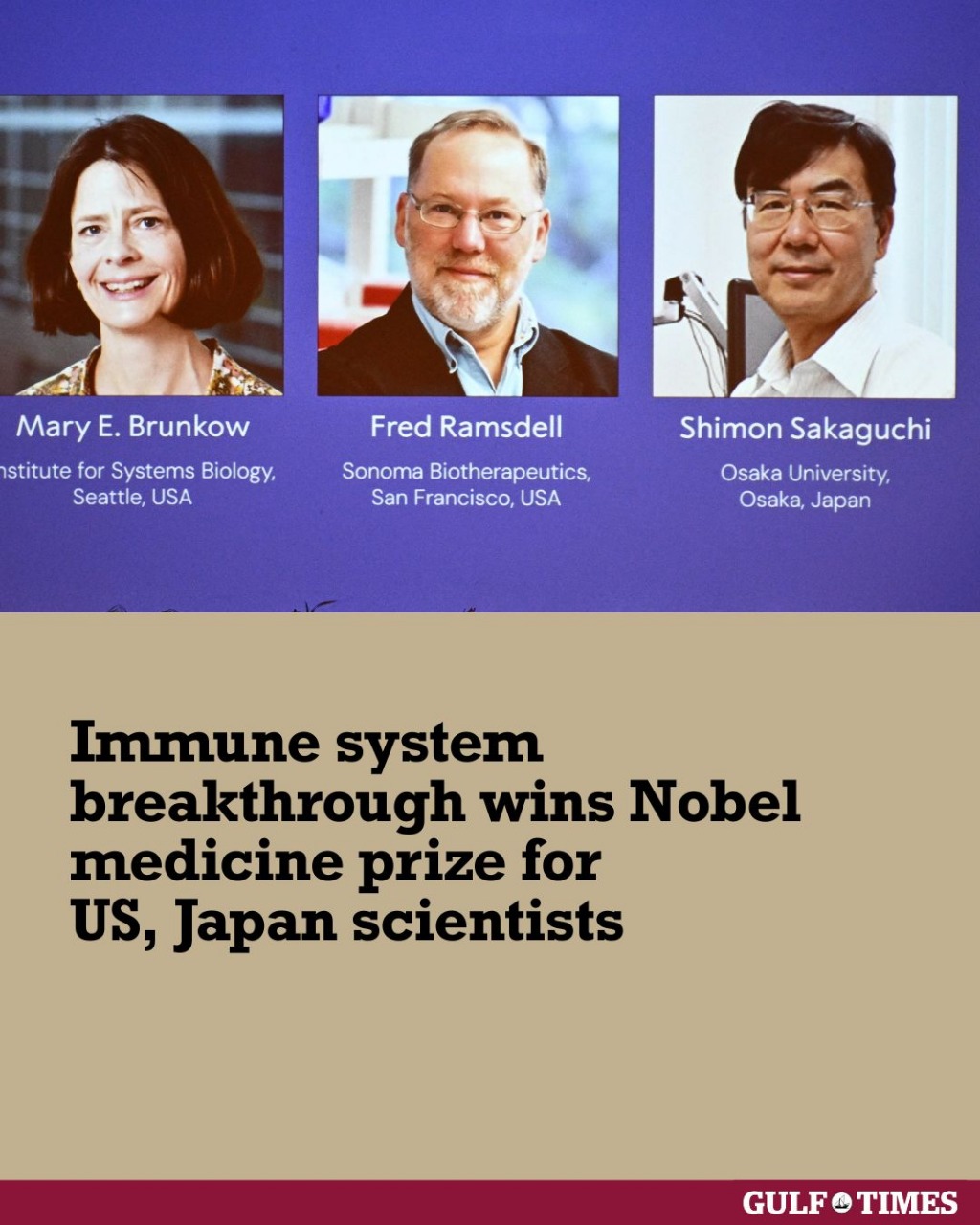
The 2025 Nobel Prize in Physiology or Medicine has been awarded jointly to Mary E. Brunkow, Fred Ramsdell, and Shimon Sakaguchi for their pioneering discoveries in peripheral immune tolerance — a cornerstone concept explaining how the human immune system distinguishes between “self” and “non-self.” Their work has profoundly shaped modern immunology, paving the way for advances in the understanding and treatment of autoimmune diseases, allergic disorders, transplantation rejection, and cancer immunotherapy.
From Observation to Discovery
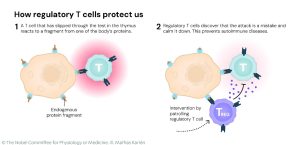
In the early 1990s, Japanese immunologist Shimon Sakaguchi identified a distinct subset of T lymphocytes that actively suppress excessive immune responses. These cells, later known as regulatory T cells (Tregs), were shown to play a crucial role in maintaining immune self-tolerance and preventing autoimmune pathology.
A few years later, American scientists Mary Brunkow and Fred Ramsdell discovered that mutations in a gene called FOXP3 caused a devastating autoimmune condition in mice (‘scurfy’ mutation) and in humans — the Immune Dysregulation, Polyendocrinopathy, Enteropathy, X-linked (IPEX) syndrome. Their discovery revealed that FOXP3 acts as a master transcription factor that determines the identity and suppressive function of Tregs. Together, these findings provided a molecular explanation for peripheral immune tolerance and revolutionized the way scientists view the balance between immune activation and suppression.
Clinical and Diagnostic Implications
Understanding the Treg–FOXP3 axis has far-reaching clinical implications:
– Autoimmunity: Defective Treg function or FOXP3 mutation leads to conditions such as type 1 diabetes, thyroiditis, rheumatoid arthritis, and systemic lupus erythematosus.
– Allergy and Hypersensitivity: Dysregulation of tolerance pathways contributes to exaggerated immune reactions to harmless antigens.
– Transplantation Immunology: Strategies to expand Tregs may help induce long-term graft tolerance without broad immunosuppression.
– Cancer Immunology: In contrast, excessive Treg activity can suppress anti-tumor immunity, providing targets for novel checkpoint therapies.
In the field of diagnostic immunology, quantification of CD4⁺CD25⁺FOXP3⁺ Tregs, evaluation of FOXP3 gene expression, and assessment of immune tolerance markers represent emerging tools for precision diagnostics and immune monitoring.
A New Era for Translational Immunology
The Nobel Committee recognized this discovery as a paradigm shift linking basic immunology to clinical medicine. Regulatory T cells are now central to several innovative therapeutic approaches — from cell-based Treg therapies for autoimmune diseases and organ transplantation, to targeted modulation of Tregs in oncology. The concept of “controllable tolerance” is transforming how we design immunotherapies and evaluate immune health.
Implications for MERITDX and the Region
At the Medical Education and Research Institute for Translational Diagnostics (MERITDX), this breakthrough reinforces our commitment to advancing translational immunology — bridging fundamental discoveries with diagnostic and clinical applications.
Our upcoming initiatives include:
– Incorporating Treg and FOXP3 analysis in autoimmune and immunodeficiency panels.
– Launching educational modules on immune tolerance, autoimmunity, and immunotherapy in our postgraduate immunology diploma.
– Encouraging collaborative research exploring regulatory T-cell–based diagnostics and therapies in regional patient populations.
Conclusion
The 2025 Nobel Prize in Medicine honors not only three exceptional scientists but also the enduring quest to understand the immune system’s delicate balance between defense and tolerance. Their discoveries on peripheral immune tolerance exemplify how innovative basic research can directly transform diagnostic immunology, clinical practice, and therapeutic innovation — a mission fully aligned with the vision of our institute.
Edited and scientifically reviewed by
Prof. Jamil Al-Mughales MSc (MEDIM-UK),FIM (UK), PhD (UK)
Professor and Consultant, Fundamental and Diagnostic Immunology
Medical Education & Research Institute for Translational Diagnostics (MERITDX)
References
- The Nobel Prize in Physiology or Medicine 2025 – NobelPrize.org
2. The Guardian, “Nobel prize in medicine awarded to scientists for immune system research,” October 2025
3. Reuters, “Immune system breakthrough wins Nobel medicine prize for US, Japan scientists,” October 2025
4. Times of India, “2025 Nobel Prize: Discoveries on Peripheral Immune Tolerance,” October 2025

No comment